

Everything below comes from the twenty-six magazines in our own collection, scanned and searchable on this site. Every date, price and specification links to the page it came from, so you can read the original for yourself.
1969-72The idea, 1969 to 1972
The X1/9 began not as a Fiat but as a Bertone daydream. In 1969 Bertone exhibited a concept car called the Runabout, a wedge-shaped two-seater built on Fiat’s behalf and powered by the transverse engine from the Autobianchi A112 (Wheels, Jan 2002, p.2). The styling was the work of Bertone’s Marcello Gandini (Unique Cars, Oct-Nov 2004, p.2), and enough of the Runabout survived into production that anyone who has seen both will recognise the family resemblance immediately.
Fiat had a practical reason to be interested. The 850 Spider was ageing, and it had been a serious earner: Bertone’s works had turned out more than 140,000 of them, a great many going to America (Motor Manual, Oct 1978, p.2). The X1/9 was built as its replacement (Sports Car World, 1974, p.3), and it inverted the old car’s engineering completely. Where the 850 Spider hung its engine out behind the rear wheels, like the 850 sedan it was based on (Wheels, Dec 1977, p.4), the new car put the engine in the middle. Fiat’s own explanation was blunt: it had adopted the layout because racetrack experience had demonstrated its "indisputable superiority" (Wheels, Dec 1977, p.5).
The car went into production during 1972 at Bertone’s Turin works, sharing the floor with the Alfa Romeo Montreal, the Lamborghini Urraco and the Fiat Dino Coupe (Classic Car, Sep 1996, p.2). North America got it first, in late 1972, into a market crying out for an alternative to the ageing MG Midget and Triumph Spitfire (Unique Cars, Oct-Nov 2004, p.2). Our magazines date the European release either to 1972, "way back", as Motor Manual put it in 1981 (Motor Manual, Nov 1981, p.2), or to 1973 (Car Australia, Nov 1988, p.2), which probably reflects the difference between the first cars built and general availability.
What made it clever was how little of it was new. The engine, transmission and most of the suspension came from the front-wheel-drive Fiat 128 sedan; Fiat simply took the whole transverse 1.3-litre package and moved it behind the occupants, ahead of the rear wheels (Wheels, Dec 1977, p.5). The engine’s forward lean was reduced from 20 degrees in the 128 coupe to 11 degrees to make it fit, along with a new inlet manifold, a redesigned exhaust and a different sump and cam cover (Sports Car World, Jul-Sep 1981, p.4). Unlike the 128, it got disc brakes on all four wheels, unassisted, with all-independent suspension by coil-and-shock struts front and rear and rack and pinion steering (Sports Car World, May 1973, p.4).
The mid-engine layout also solved the problem it usually creates. Because the engine sat between the cockpit and the rear axle, there was luggage space at both ends: 9.9 cubic feet of it, split 4.4 in the front and 5.5 behind the engine (Sports Car World, May 1973, p.4), and the targa roof panel stowed under the front bonnet without eating much of it (Modern Motor, Dec 1979, p.2). The whole car weighed 1940 lb on an 86.5 inch wheelbase (Sports Car World, May 1973, p.4).
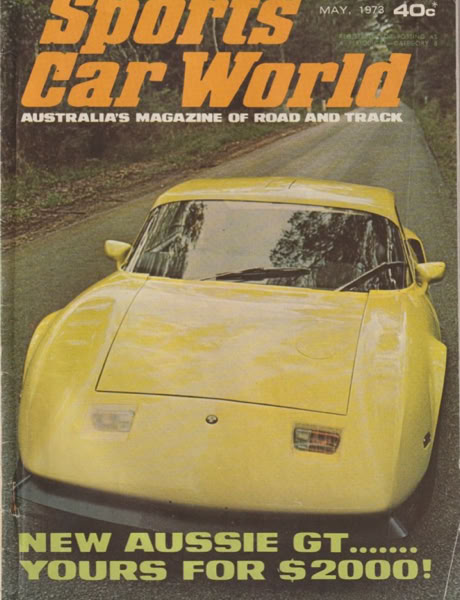
Sports Car World tested one in May 1973 and called it "the first of the new wave sports cars" (Sports Car World, May 1973, p.2). The 1290 cc single-overhead-cam four made 75 bhp at 6000 rpm and 72 lb/ft at 3400 on 8.9:1 compression, running 145 HR 13 tyres (Sports Car World, May 1973, p.4), good for 104.1 mph and 0-60 mph in 13.2 seconds (Sports Car World, May 1973, p.4). The verdict was not subtle: more fun than any machine the tester knew.
There was one line in that 1973 test that would define the next five years for Australian enthusiasts. Sixty percent of planned production, 100 cars a day, was earmarked for America. Australia, the magazine noted, was "on the hope list" (Sports Car World, May 1973, p.4).
1973-78Series 1: the long wait, and the arrival, 1973 to 1978
For most of the 1970s the X1/9 was a car Australians read about and could not buy. By 1974 the Australian Design Rules barred it outright. In England you could have one, but only through an expensive right-hand-drive conversion (Sports Car World, 1974, p.2) — the London importer Radbourne charged £250 for the job, which took about a week (Sports Car World, 1974, p.6). In Italy the car itself was a £1550 bargain, though Radbourne’s own imported and converted cars sold for £2500, the sort of money that bought an Alfetta or an Audi 100GL (Sports Car World, 1974, p.6). Sports Car World’s judgement in 1974 was that on release the X1/9 had been "the only truly modern sports car in the world today", excluding the expensive exotica (Sports Car World, 1974, p.3).
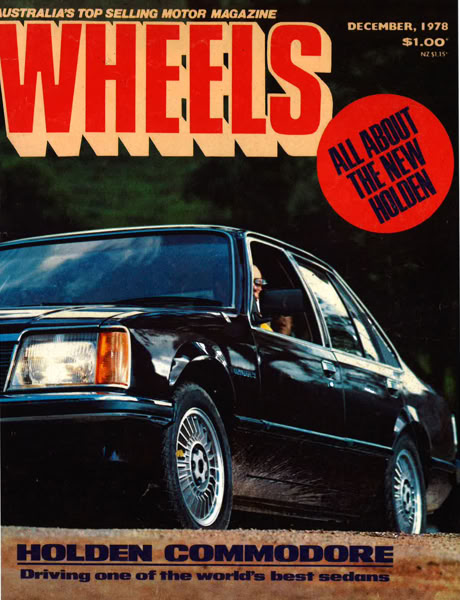
Wheels later set out plainly why it took nearly six years to get here. First there were no right-hand-drive cars at all. Then Fiat decided to build a few, and those went to Britain, where the volume was (Wheels, Dec 1978, p.5). On top of that sat the cost of proving compliance with local design rules and Australia’s import quota problems (Wheels, Dec 1978, p.5). Fiat’s own line was that the car would have arrived sooner but for the "bureaucratic and complicated testing" needed to prove it was safe on Australian roads (Wheels, Aug 1978, p.2), and the company’s national advertising manager Bob Neave put the cost of compliance at $300 to $400 on a car this size (Wheels, Aug 1978, p.2).
Meanwhile the sports car was quietly dying in Australia. Leyland killed the MGB here in 1973, Alfa Romeo the 2000 Spider in 1974, and the Jensen Healey went when Jensen collapsed in 1976 (Wheels, Dec 1977, p.4). The Triumph sports models were withdrawn because Leyland decided they were not worth the effort of meeting the ADRs (Wheels, Dec 1977, p.4).
Then, in December 1977, Wheels got its hands on one of the first X1/9s in the country and announced that the car was about to be released here (Wheels, Dec 1977, p.2-3). It was not quite a road test: the car was an English-specification example that did not comply with Australian law, right down to its seat belts (Wheels, Dec 1977, p.5). The magazine warned that local outputs would be somewhat lower than European ones once the anti-pollution plumbing required by ADR27A was fitted (Wheels, Dec 1977, p.5). On its Pirelli Cinturato P3s, wide track and stiff all-independent suspension, it had roadholding "quite outside the experience of nearly all normal car drivers" (Wheels, Dec 1977, p.6).
The car reached the Australian market in May 1978 (Modern Motor, Feb 1979, p.4). Fiat marked the occasion with a press day at Warwick Farm’s short circuit, where journalists drove the X1/9 alongside the yet-to-be-released Lancia Gamma and the Beta automatic, with a barbecue lunch thrown in (Wheels, Aug 1978, p.2). By August it was in Fiat showrooms at $9500 (Wheels, Aug 1978, p.2).
These first cars are what we now call Series 1: small bumpers, the 1290 cc engine, a four-speed gearbox and a carburettor. Motor Manual’s October 1978 road test recorded the detail: 86 mm bore, 55.5 mm stroke, 9.2:1 compression, a twin-choke Weber, 53.7 kW (73 bhp) at 6000 rpm and 101 Nm at 3400, a four-speed manual with a 4.077 final drive, 3830 mm long and 880 kg, on Michelin XAS 145-13 tyres and 4.5 inch rims, with discs at all four corners (Motor Manual, Oct 1978, p.7). It ran 0-100 km/h in 12.8 seconds and the standing 400 metres in 18.9 at a terminal 119 km/h, pulled 160 km/h in fourth at 6700 rpm, and used 9.3 litres per 100 km on test from a 48-litre tank (Motor Manual, Oct 1978, p.7). The basic price was $9690, and the test car, from Spencer Motors of South Melbourne, came to $10,060 with its one option, a $370 AM/FM radio stereo cassette (Motor Manual, Oct 1978, p.7). Against its rivals — an Alfasud Ti at $6990, a Datsun 260Z at $10,119, a Lancia Beta Coupe at $11,283, a Triumph TR7 at $10,495 — it was near the top of the group (Motor Manual, Oct 1978, p.7). The magazine’s star ratings tell the story of the car in one glance: five out of five for steering, ride and road holding, three for engine, gearbox, brakes and performance, and four overall (Motor Manual, Oct 1978, p.7).
By then Bertone had built more than 100,000 X1/9s (Motor Manual, Oct 1978, p.2), a milestone worth remembering when you meet the wildly varying lifetime totals quoted later.
Wheels road-tested the local car that December, by which time it wore an Australian Design Rule compliance plate riveted to its firewall and cost $9650 (Wheels, Dec 1978, p.5). Demand, the magazine wrote, would at least ensure that no X1/9 gathered dust in the showroom (Wheels, Dec 1978, p.5). Wheels had been waiting a long time for this: nearly five years earlier its own Kilroy Robinson had driven one of the first year’s production cars in Italy and reported handling comparable to a mid-engined Ferrari’s (Wheels, Dec 1978, p.3). Now the magazine declared a sports car revival under way in Australia, and "more than any other, the key to it is this car, the Fiat X1/9" (Wheels, Dec 1978, p.3).
The sting came in the same test’s headline: it was a shame, Wheels wrote, that the buyers who were its primary target would not be able to afford it (Wheels, Dec 1978, p.2).
Two months later the magazine put the X1/9 head to head with the Triumph TR7 — the two cars had taken five years and three and a half years respectively to reach Australia and arrived within months of each other (Wheels, Feb 1979, p.5). They were priced within sixty dollars of one another: the X1/9 at $9637, the TR7 at $9695 (Wheels, Feb 1979, p.5). The Fiat’s 1.3-litre made 54 kW at 6000 rpm and 98 Nm at 3400, on a kerb mass of 880 kg, with a 9.63 metre turning circle and Michelin XAS 145HR13 tyres (Wheels, Feb 1979, p.8). It covered the standing 400 metres in 19.2 seconds and returned 9.3 km/L overall (Wheels, Feb 1979, p.5; Wheels, Feb 1979, p.8).
The missing gear dominated the comparison. Wheels wrote that the necessity for a fifth ratio had become obvious, and pointed out that the TR7 was faster in fourth and still had a fifth to come (Wheels, Feb 1979, p.5). But the Fiat stopped hard and level without fade, where the TR7’s brakes were judged below the standard expected of a sports car (Wheels, Feb 1979, p.7), and in the tight stuff the little Fiat kept the TR7 honest and, with a bold enough driver, took the lead and kept it (Wheels, Feb 1979, p.7).
That, in one sentence, is the X1/9’s whole Australian career: outgunned everywhere except where it mattered most to the people who bought it.
Two small period curiosities are worth recording. Fiat chairman Gianni Agnelli, then the number one target for Italy’s terrorists, drove himself through Turin’s rush hour in a dark olive X1/9, using aggressive driving as his security detail (Modern Motor, Feb 1979, p.3). And in July 1979, an X1/9 wearing NSW plate JRN 592 starred in an Australian Playboy photo essay (Playboy, Jul 1979, p.3), which is either the high point or the low point of the model’s local publicity depending on your view.
1979-80Series 1.5: bigger bumpers, same engine, 1979 to 1980
In late 1979 the facelift arrived. The magazines of the day called it the "second series", which is worth knowing when you follow the citation links below; in club usage these 1979-1980 cars are Series 1.5, and the combination that identifies one beyond argument is the larger wrap-around bumper bars with the 1300 engine and four-speed gearbox still underneath.
The changes were mostly at the corners and inside. The questionable "tiger" stripes along the flanks were gone, and the larger bumpers included an integrated front air dam, with a bigger engine cover at the back (Wheels, Dec 1979, p.5). Those bumpers were US-market items capable of absorbing impacts up to 5 km/h (Modern Motor, Dec 1979, p.2), and they cost the car about 100 mm in overall length (Motor Manual, Nov 1981, p.3). Inside, the instrumentation changed, a lockable glovebox appeared at last, there was a new steering wheel, and the X1/9 inherited the Fiat Ritmo’s rocker switchgear (Wheels, Dec 1979, p.5). Motor Manual added the rest of the list: an LED digital clock, cockpit-adjustable exterior mirrors, an intermittent wiper mode, an air extractor grille, a new dark-brown dash and centre console, deeper better-defined bucket seats and new ribbed carpet (Motor Manual, Jan 1980, p.3). The glovebox mattered more than it sounds; the previous car had nowhere at all to put anything (Motor Manual, Jan 1980, p.3).
Underneath, the track went out 20 mm at the front and 7 mm at the rear, for a claimed 41.3/58.7 front-to-rear weight split (Motor Manual, Jan 1980, p.3), which Modern Motor reckoned made an already tenacious handler better still (Modern Motor, Dec 1979, p.2). The wheels grew too, to five-inch rims carrying 165/70 tyres, half an inch wider than the standard rims (Wheels, Dec 1979, p.5).
What did not change was the engine and gearbox, and that was the story. Australia was still getting the 1290 cc four-speed car (Wheels, Dec 1979, p.5), and Wheels called it a plain disappointment that we had received the old engine and gearbox long after the bigger engine and five-speed box existed overseas (Wheels, Dec 1979, p.5). Modern Motor was equally direct: the second series brought a number of changes, "but sadly the bigger 1500cc engine isn’t among them" (Modern Motor, Dec 1979, p.2). The bigger engine would come one day, the magazine expected, but in the interim the car kept the 1290 cc unit (Modern Motor, Dec 1979, p.2). By January 1980 the estimate had firmed up unhelpfully: the 1500 was still some 18 months away (Motor Manual, Jan 1980, p.3).
Worse, the Series 1.5 was slightly slower than the car it replaced. Output fell from 53.7 kW to 51.5 kW and torque from 101 Nm to 98 Nm, and the car carried an extra 10 kg (Motor Manual, Jan 1980, p.4). The standing 400 metres took 18.2 seconds, three tenths slower than last time (Motor Manual, Jan 1980, p.4), with 0-80 km/h in 10.1 seconds, 0-100 in 15.5, and a stop from 80 km/h in 26.8 metres with no wheels locked (Motor Manual, Jan 1980, p.4). Economy stayed good at 8.7 L/100 km driven hard and 8.1 touring (Motor Manual, Jan 1980, p.4).
Modern Motor’s own December 1979 test of the same car recorded 0-100 km/h in 14.2 seconds and the standing 400 metres in 18.8, with a 160 km/h top speed and 8.7 litres per 100 km, on a kerb weight of 890 kg and 227 mm discs front and rear (Modern Motor, Dec 1979, p.2).
The price, though, had moved: $10,998 in December 1979 (Modern Motor, Dec 1979, p.2) and $11,700 by January 1980 (Motor Manual, Jan 1980, p.4), against $9650 fourteen months earlier.
None of which stopped Motor Manual concluding that "there is no better driver’s car around" (Motor Manual, Jan 1980, p.4).
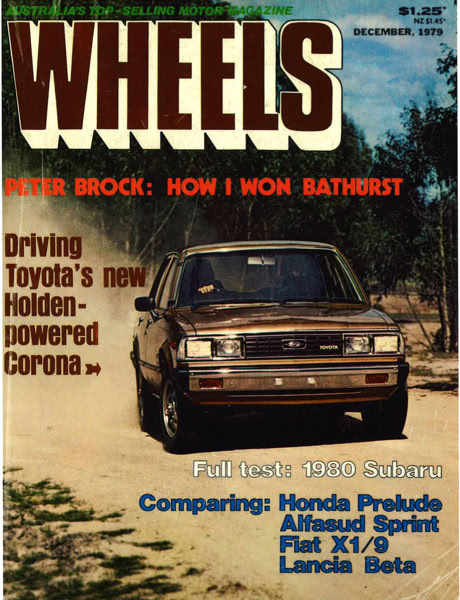
The best single document of this era is Wheels' four-car comparison of December 1979, eighteen pages built around a two-day drive through Sofala and Hill End on a freezing, misty August morning (Wheels, Dec 1979, p.16). The X1/9 was listed at $10,998, against a Honda Prelude at $8549, an Alfasud Sprint at $10,790 and a Lancia Beta Coupe at $13,198 (Wheels, Dec 1979, p.5).
The Fiat won on economy outright, its best 12.8 km/L on fast open road running and its worst 8.8 in town, for an overall 10.8 (Wheels, Dec 1979, p.6). It did not win much else: the Alfasud Sprint took handling, brakes and accommodation, though the testers noted the X1/9’s gentle, controllable drift and wished only for the power to exploit it (Wheels, Dec 1979, p.8). The four-speed gearbox drew the sharpest criticism: close ratios between first and third, then an abrupt gap to fourth, leaving you effectively two useful gears on the open road (Wheels, Dec 1979, p.6).
The engine numbers from that test are worth separating carefully, because they are often confused. The manufacturer’s claimed output was 51.5 kW at 6000 rpm and 96 Nm at 3400; what Wheels actually measured on a chassis dynamometer was 34.2 kW at 6000 rpm and 62 Nm at 4000 (Wheels, Dec 1979, p.7; Wheels, Dec 1979, p.8). The first is the figure in the brochures, the second is what reached the road.
Two details from that test deserve to survive. Cabin noise at 110 km/h barely changed with the targa roof on or off, 92 dBA against 94, which the magazine put down to Bertone’s aerodynamics (Wheels, Dec 1979, p.8). And Wheels' staff stylist David Bentley called the X1/9 "a Bertone masterpiece", one of the few sharp-edged wedges to have kept its freshness, while judging the new bumpers more functional but visually overpowering on so small a car (Wheels, Dec 1979, p.14).
1981-83Series 2: the 1500 five-speed, 1981 to 1983
The car everyone had been waiting for went on sale in Australia in September 1981 (Wheels, Sep 1981, p.4). These are the Series 2 cars, 1981 through 1983.
The engineering was straightforward. The 1290 cc four was stroked to 1498 cc, compression went to 9.2:1, and it gained a larger twin-throat Weber with automatic choke and a changed exhaust (Wheels, Sep 1981, p.4). Modern Motor added the detail: the stroke went out from 55.5 mm to 63.9, the twin-choke downdraught Weber grew 2 mm to 34 mm, and a new camshaft profile went in (Modern Motor, Sep 1981, p.5), with the clutch up 9 mm to 190 mm to cope (Modern Motor, Sep 1981, p.5). Power rose from 51 to 59 kW at a slightly lower 5750 rpm, torque from 96 to 118 Nm at 3250 (Wheels, Sep 1981, p.4); the magazine’s own specification panel puts the figure more precisely at 58.8 kW (Sports Car World, Jul-Sep 1981, p.8).
The gearbox mattered as much as the engine. The first three ratios carried over, fourth was lowered to 1.042:1, a 0.863:1 fifth was added, and the 4.076 final drive stayed (Wheels, Sep 1981, p.4). Lowering fourth was the point: it closed the notorious gap left by the four-speeder’s 0.959 top (Sports Car World, Jul-Sep 1981, p.6). The car the Australian press had been complaining about for three years was fixed in one stroke.
And three years is the right number. The 1500 engine had been introduced in Europe late in 1978, soon after the 1.5-litre front-drive Ritmo/Strada replaced the 128 series (Sports Car World, Jul-Sep 1981, p.4). Wheels put it more tartly: "All of this was news in Europe three years ago" (Wheels, Sep 1981, p.4).
Part of the delay was compliance. The importer, LNC Industries, kept selling 1300s while the bigger-engined car went through the ADR process, then brought in an initial batch of 150 of the new model (Wheels, Sep 1981, p.4; Motor Manual, Nov 1981, p.3); the launch itself was handled by Auswide Pty Limited, the national marketer of Fiat and Lancia (Auswide press kit, p.2). One nice period touch: some of the cars in showrooms at launch had been built by Bertone as recently as July 1981 (Wheels, Sep 1981, p.5).
The road tests were, at last, happy ones. Wheels and Sports Car World appear to have shared the same press car at Castlereagh dragstrip, and their figures are within a fifth of a second of each other: Wheels recorded 0-100 km/h in 11.4 seconds and the standing 400 metres in 18.1 (Wheels, Sep 1981, p.5), Sports Car World 11.6 and 18.3 (Sports Car World, Jul-Sep 1981, p.8). Both put the car at 930 kg with 58.8 kW at 5750 rpm and 118 Nm at 3250 (Sports Car World, Jul-Sep 1981, p.8). Economy was the revelation: 13.0 km/L averaged over nearly 1400 km, with a best of 15.1 (Sports Car World, Jul-Sep 1981, p.7; Wheels, Sep 1981, p.5).
Motor Manual recorded 11.0 seconds to 100 km/h and 18.2 for the 400 metres at a terminal 116 km/h, on a 920 kg kerb weight, and reckoned the car would pull well over 185 km/h in fifth with the roof on (Motor Manual, Nov 1981, p.3). Modern Motor saw 180 km/h with the engine still willing and reckoned about 205 was there if the car could pull fifth to the red line (Modern Motor, Sep 1981, p.7), while averaging 7.74 L/100 km, its worst 9.4 and its best better than 7.0 (Modern Motor, Sep 1981, p.5). Modern Motor is the outlier on output, quoting 62.5 kW at 6000 rpm where the other two say 58.8 at 5750 (Modern Motor, Sep 1981, p.7).
Nobody could agree on the price either, which tells you something about how fluid the relaunch was. Sports Car World, writing earliest, said it had not been settled but would be around $13,000 (Sports Car World, Jul-Sep 1981, p.7). Wheels said $13,500 (Wheels, Sep 1981, p.5). Modern Motor said around $13,800 in its text and listed $13,850 in its comparison table (Modern Motor, Sep 1981, p.7), and Motor Manual quoted $13,995 excluding on-road costs, matching the press kit exactly (Motor Manual, Nov 1981, p.3). Against the competition Modern Motor put the X1/9 at $13,850, a Mazda RX7 at $16,380, a Triumph TR7 at $11,495 and a Datsun 280ZX at $18,800 (Modern Motor, Sep 1981, p.7). One period grumble: at that money, the car still came without a radio (Sports Car World, Jul-Sep 1981, p.7).
The Auswide press kit, September 1981
The single most valuable document in our collection for this era is not a magazine at all. It is the launch press kit issued by Auswide Pty Limited of 27 Waterloo Road, North Ryde, national marketers of Fiat and Lancia (Auswide press kit, p.2). Its final page carries a typed date stamp, 19810908, which puts it at 8 September 1981, exactly the month Wheels reported the car going on sale (Auswide press kit, p.9). This is the launch document itself. Auswide’s general manager Peter Sturrock presented the car as the second stage of the company’s rebuilding programme (Auswide press kit, p.13), the first having been the twin-cam SuperBRAVA introduced that March, whose nine months of scheduled stock sold out in five (Auswide press kit, p.13).
Because it is an importer document it gives numbers no road test would: about 1200 four-speed 1300 cc cars had been sold in Australia since 1978 (Auswide press kit, p.14), and Auswide expected to sell around 400 of the new 1500 in a full year (Auswide press kit, p.14). It also explains the shortage: the small scale of X1/9 manufacture in Italy and the constrictions of the import quota system had prevented the company selling more over the previous couple of years (Auswide press kit, p.13). The X1/9 was, in Auswide’s words, the only car of its type available in Australia (Auswide press kit, p.14).
The kit’s own specifications compare the two cars directly: 58.8 kW (80 hp) at 5750 rpm and 118 Nm at 3200 for the 1500, against 53.7 kW (73 hp) at 6000 and 101 Nm at 3400 for the 1300 (Auswide press kit, p.10), with unladen weight up from 880 kg to 920 kg, wheels widened from 4.5J to 5J, and tyres from 145 HR x 13 to 165 x 13 (Auswide press kit, p.11). Claimed top speed was 170 km/h, with the shift from fourth to fifth at 120 km/h dropping the engine from 5000 to 4000 rpm (Auswide press kit, p.6). Recommended retail was $13,995, with alloy wheels at $400 and metallic paint at $250, in a choice of metallic silver, blue and red, or solid red (Auswide press kit, p.9). That $13,995 is the figure to trust: Motor Manual quoted exactly the same price in November 1981 (Motor Manual, Nov 1981, p.3), and so did Wheels the following August (Wheels, Aug 1982, p.4).
And, because it is marketing, it claimed 150,000 X1/9s bought worldwide, with Fiat the only remaining mass-producer of affordable sports-car motoring (Auswide press kit, p.2).
The verdict changes
The clearest measure of what the 1500 five-speed did to the car’s reputation comes from Wheels in August 1982. Gavin Green recalled that in 1978 the 1300 four-speed he drove near Amaroo Park had been comfortably overtaken by a standard Datsun 180B sedan (Wheels, Aug 1982, p.2). Four years later, driving a 1500 five-speed from London to the French Riviera, he several times saw an indicated 190 km/h, about 180 in real terms, on French autoroutes (Wheels, Aug 1982, p.2), ran the 1300 km from Menton to Calais in nine and a half hours at an average of 136.8 km/h (Wheels, Aug 1982, p.4), and finished the trip admitting his opinion of the car had changed (Wheels, Aug 1982, p.4).
Behind the scenes, though, the model was already in trouble. Early in 1981 there had been a public falling-out between Fiat and Bertone, which claimed it was losing money on the deal (Wheels, Sep 1981, p.4), and Australian journalists were being given factory assurances that production would continue for the foreseeable future (Wheels, Sep 1981, p.4) — never a sign of rude health. Production figures tell the rest: 1980 was the model’s peak year at just over 20,000 cars, 1981 dipped to 14,993, and the upheaval of the handover dropped 1982 to just over 4000 (Classic Car, Sep 1996, p.2).
In Australia the end came quietly. By 1983 the price had climbed to well over $15,000, Commodore SL/X territory, and the car was simply removed from the market (Car Australia, Nov 1988, p.2). Unique Cars dates the end of the local Series 2 run to the middle of 1983 (Unique Cars, Oct-Nov 2004, p.3).
1987-90Series 3: the Bertone years, 1987 to 1990
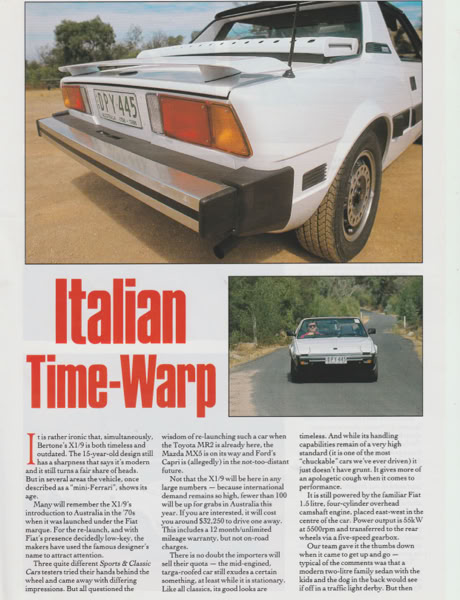
The X1/9 did not die when Fiat lost interest; it changed hands. Fiat handed the assembly operation to Bertone and the car dropped its Fiat badging, though Fiat promised to keep parts supply going (Classic Car, Sep 1996, p.2). Car Australia drew the obvious parallel: just as Pininfarina had taken over the 124 Spider in the early 1980s, so Bertone took on the X1/9, which now carried no Fiat identification at all (Car Australia, Nov 1988, p.2). Modern Motor’s version is more dramatic: after a Fiat cost-cutting crisis nearly killed the car, Bertone stepped in to rescue it (Modern Motor, Jan 1989, p.4).
In mid-1986 Bertone was still building the car for some markets (Sports Car World, Jun-Jul 1986, p.3), and in 1988 it came back to Australia. The Series 3 cars, 1987 to 1990, are the fuel-injected ones: any X1/9 built after 1987 has injection, everything before it is carburetted. Along with the injection the returning car had larger wheels, power-assisted brakes, improved seats and a rear spoiler (Unique Cars, Oct-Nov 2004, p.3).
It was sold here under the Bertone name rather than Fiat’s, with Fiat’s local presence decidedly low-key and the famous designer’s name used to attract attention (Sports & Classic Cars, 1988, p.1). It was never going to be a volume exercise: international demand was high enough that fewer than 100 cars were allocated to Australia for 1988, at around $32,250 to drive one away, including a twelve month unlimited-mileage warranty but not on-road charges (Sports & Classic Cars, 1988, p.1).
That price is worth holding on to, because it explains why so few were sold. The X1/9 had cost $9650 when it arrived in 1978 (Wheels, Dec 1978, p.5); ten years later it cost more than three times as much.
The road tests of the returning car are affectionate but clear-eyed. Sports & Classic Cars recorded 0-100 km/h in 13.2 seconds and a stop from 100 km/h in 3.3 seconds with no fade to speak of, while noting the speedometer read about 15 km/h optimistic all the way up (Sports & Classic Cars, 1988, p.2). The 15-year-old design still had a sharpness that said modern, the magazine wrote, but in several areas the car once described as a "mini Ferrari" was showing its age (Sports & Classic Cars, 1988, p.1).
The mechanical detail of these last cars is worth recording, because they are the ones club members are most likely to own. Modern Motor’s data panel lists 1498 cc, 86.4 x 63.9 mm bore and stroke, electronic fuel injection, 8.5:1 compression, 56 kW at 5500 rpm and 109 Nm at 3000, a five-speed gearbox, 227 mm discs front and rear, 980 kg, a 47-litre tank and Pirelli P6 185/70 R13s on 5.0J alloys (Modern Motor, Jan 1989, p.6). It ran 0-100 km/h in 11.89 seconds and the standing 400 metres in 17.98, with a best of 17.74, and averaged 9.0 litres per 100 km (Modern Motor, Jan 1989, p.6).
Both magazines put it against the Toyota MR2, the car that had taken the X1/9’s idea and industrialised it. The Bertone was $32,250, the MR2 $33,250 list and $36,005 as tested with air-conditioning and a sunroof (Car Australia, Nov 1988, p.4) — a thousand dollars between them on list price, as Car Australia noted, with the X1/9 still "around the price of a top Holden" (Car Australia, Nov 1988, p.7). Modern Motor’s January 1989 figures match exactly: $32,250 for the Bertone against $33,250 for the Toyota (Modern Motor, Jan 1989, p.6). The Toyota was faster, better built, better equipped and easier to live with. And yet, fifteen years down the road, Car Australia found that the X1/9 still out-handled it (Car Australia, Nov 1988, p.3), and admitted in its conclusion that having judged the MR2 the winner in cold, practical terms, the staff spent the next day in the car park working out how to keep the Fiat (Car Australia, Nov 1988, p.7).
The Australian story ends with a number that is easy to remember: the final local allocation was 54 cars, and they were among the last X1/9s ever produced (Unique Cars, Oct-Nov 2004, p.3). Bertone discontinued the model in early 1989 (Unique Cars, Oct-Nov 2004, p.3).
Classic Car, looking back in 1996, dated the Australian run from 1978 to 1989 (Classic Car, Sep 1996, p.2), and Unique Cars' fast-facts panel gives the same 1978-89 span (Unique Cars, Oct-Nov 2004, p.5). Classic Car’s summary of why it never quite worked here is worth quoting for its bluntness: the car found its way to Australia through the ill-fated TKM organisation in the 1980s and never had the marketing and sales support it needed, "a classic example of wasted opportunities" (Classic Car, Sep 1996, p.2). And at about the same time the X1/9 left the market, the Mazda MX5 arrived with an amazing marketing campaign and became the car to have (Classic Car, Sep 1996, p.2).
How many were there?
Our magazines cannot agree, and it is more honest to show you the disagreement than to pick a number and pretend.
The period milestones are the firmest ground, because each was reported at the time. Bertone had built more than 100,000 by October 1978 (Motor Manual, Oct 1978, p.2) and more than 130,000 by mid-1981 (Sports Car World, Jul-Sep 1981, p.5), and Auswide claimed 150,000 worldwide in its September 1981 launch kit (Auswide press kit, p.2). Year by year, production peaked at just over 20,000 cars in 1980, dipped to 14,993 in 1981 and collapsed to just over 4000 in 1982 during the handover to Bertone (Classic Car, Sep 1996, p.2).
The lifetime totals are another matter, and the magazines cannot even keep their own stories straight. Classic Car printed "just over 150,000" in one column and 140,500 in another on the same page (Classic Car, Sep 1996, p.2). The Classic Car Yearbook tabulated 141,108 for the 1300 and 1500 together, then wrote of more than 170,000 in its closing paragraph (Classic Car Yearbook, 2004, p.4). Sports & Classic Cars said 170,000 by 1988 (Sports & Classic Cars, 1988, p.3), Unique Cars 160,000 (Unique Cars, Oct-Nov 2004, p.5), and Wheels over 180,000 (Wheels, Jan 2002, p.2).
The two most specific figures, 140,500 and 141,108, come from different magazines twelve years apart and land within about six hundred cars of each other, which is the closest thing to agreement in the whole collection. The larger round numbers may be counting differently or simply repeating each other. As the Yearbook itself admits, precise numbers were never released (Classic Car Yearbook, 2004, p.4).
For Australia, the only hard number we have is the importer’s own: about 1200 four-speed 1300s sold here from 1978, with Auswide forecasting around 400 of the 1500 in a full year (Auswide press kit, p.14). The Bertone return added fewer than 100 cars, of which the final 54 were the last of all (Sports & Classic Cars, 1988, p.1; Unique Cars, Oct-Nov 2004, p.3). Add those together and something under two thousand cars is the right order of magnitude, but none of our magazines prints an Australian total, so we are not going to invent one.
1996-2004The classic years, 1996 to 2004
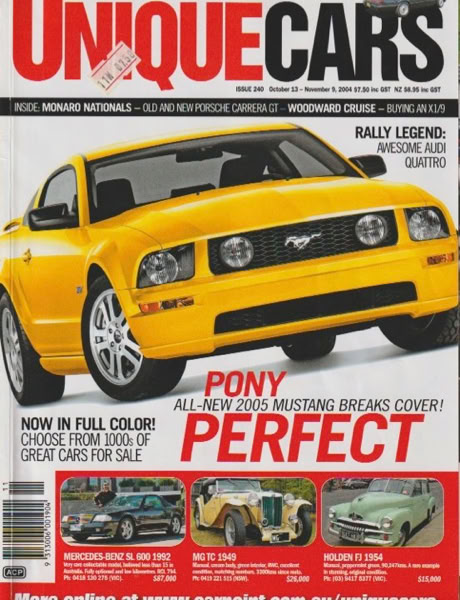
By the mid-1990s the X1/9 had become what it is now: a cheap way into a genuinely exotic idea. In September 1996 a reasonable car could be picked up in Australia for $5000 to $6000, with the warning that anything advertised at $3000 should only ever be considered for spares (Classic Car, Sep 1996, p.3), and the magazine’s verdict was that the X1/9 was undervalued and could represent a very sound investment (Classic Car, Sep 1996, p.3).
That article also gives us the earliest club census in our collection: about 25 X1/9s on the books of the register in 1996, kept by Ian Allison of the Fiat Car Club of NSW, with the admission that determining exactly how many had come into Australia was hard (Classic Car, Sep 1996, p.3).
By late 2004 the market had settled into brackets that will look familiar to anyone who has bought one. Early 1300s in usable condition went for under $3000, with another $5000 or so likely needed to make them reliable; $5000 to $7500 bought a well-preserved and maintained early-1980s 1500; and $10,000 and up bought a good fuel-injected Bertone or a show-quality Series 2 (Unique Cars, Oct-Nov 2004, p.4). In Britain, where rust-free cars of any kind are scarce, a sound late Bertone went for the equivalent of $7000 (Unique Cars, Oct-Nov 2004, p.4). Values for the X1/9 had plateaued at affordable levels, which the Classic Car Yearbook thought made it an attractive proposition (Classic Car Yearbook, 2004, p.4), while Unique Cars observed that despite being an icon of 1970s sports car design, the X1/9 had been slow to achieve classic market recognition (Unique Cars, Oct-Nov 2004, p.4).
The buying advice of the period has not dated at all. Rust is the enemy: the sills, the bottoms of the doors, and the deep wells on either side of the engine bay, which gather moisture and can prove terminally expensive (Classic Car, Sep 1996, p.3). Check the cabin floors, door sills and shut panels, windscreen pillars, front boot floor and rear mudguards (Unique Cars, Oct-Nov 2004, p.5). Above all, check the coolant pipes running between the front-mounted radiator and the engine: corrosion there means a very pricey repair, because both pipes are welded under the sills (Classic Car, Sep 1996, p.3; Unique Cars, Oct-Nov 2004, p.5). Weak synchromesh is a common gearbox complaint, though the transmissions themselves are generally robust (Unique Cars, Oct-Nov 2004, p.5). By 2004 basic parts were available from specialists in Australia, and virtually anything could be ordered over the internet from the USA or Europe (Unique Cars, Oct-Nov 2004, p.4).
What the press got right
Taken together, thirty-one years of Australian road tests tell a consistent story, and it is not quite the story the specifications suggest.
Every magazine that drove an X1/9 said some version of the same thing. Motor Manual’s 1978 star ratings gave it full marks for steering, ride and road holding and three out of five for its engine, gearbox and performance (Motor Manual, Oct 1978, p.7). Wheels in 1979 found it beaten on outright handling by an Alfasud Sprint yet wished only for more power to exploit what the chassis could do (Wheels, Dec 1979, p.8). Motor Manual in 1980 said there was no better driver’s car around (Motor Manual, Jan 1980, p.4). Car Australia in 1988 conceded the Toyota MR2 was the better car in cold, practical terms and then admitted the X1/9 was still faster through the corners (Car Australia, Nov 1988, p.3).
The complaints were consistent too, and mostly about money and gearing rather than the car itself. It was always dearer than its performance justified — Wheels said so at the very first local road test (Wheels, Dec 1978, p.2) and Car Australia was still saying it ten years later, noting that the $9637 it cost in June 1978 was enough to buy a five-litre HZ Monaro four-door (Car Australia, Nov 1988, p.2). And the three years Australia spent stuck with the four-speed 1300 after Europe had the 1500 five-speed shaped the local reputation of the car more than any engineering decision Fiat made.
What the magazines could not know, writing at the time, is which judgement would last. Wheels' David Bentley picked it in December 1979, calling the X1/9 a Bertone masterpiece and one of the few sharp-edged wedge shapes to have kept its freshness (Wheels, Dec 1979, p.14). Nearly half a century on, that is still the first thing people say when one goes past.
Sources
All twenty-six titles below are scanned in full on our Magazines page. Page numbers in the citations above refer to the PDF page, so every link opens the original at the passage quoted.
Launch era and the wait (1973-1977)
- Sports Car World, May 1973 — first road test, "the first of the new wave sports cars"
- Sports Car World, 1974 — ADRs bar it from Australia; UK right-hand-drive conversions
- Wheels, December 1977 — first Australian drive, pre-release English-specification car
Series 1 (1978 and before)
- Wheels, August 1978 — Warwick Farm press day
- Motor Manual, October 1978 — full road test with specifications and rivals
- Wheels, December 1978 — Australian-specification road test
- Wheels, February 1979 — X1/9 versus Triumph TR7
- Modern Motor, February 1979 — road test; Agnelli in Turin
- Playboy, July 1979 — "Night Driver" photo essay
Series 1.5 (1979-1980)
- Wheels, December 1979 — eighteen-page four-car comparison, Sofala and Hill End
- Modern Motor, December 1979 — facelift road test (note: this scan is filed under a motor-manual filename, but the magazine is Modern Motor)
- Motor Manual, January 1980 — facelift road brief
Series 2 (1981-1983)
- Wheels, September 1981 — 1500 five-speed Australian launch test
- Modern Motor, September 1981 — 1500 five-speed road test
- Sports Car World, July-September 1981 — 1500 five-speed, engine and gearbox detail
- Motor Manual, November 1981 — 1500 five-speed test; Australian distribution history
- Auswide press kit, September 1981 — the importer’s launch kit for the 1500 five-speed, with Australian sales figures. Dated 8 September 1981 by the stamp on its last page, though the file is catalogued here as 1982
- Wheels, August 1982 — London to the Riviera
Series 3 and the wind-down (1986-1989)
- Sports Car World, June-July 1986 — mid-engined retrospective
- Sports & Classic Cars, 1988 — "Italian Time Warp", the Bertone relaunch
- Car Australia, November 1988 — Bertone X1/9 versus Toyota MR2
- Modern Motor, January 1989 — fuel-injected Bertone versus MR2
Classic era (1996-2004)
- Classic Car, September 1996 — buyer’s guide and club register
- Wheels, January 2002 — retrospective
- Classic Car Yearbook, 2004 — Lotus Europa and Fiat X1/9
- Unique Cars, October-November 2004 — buyer’s guide with values and known problems
Notes on dates and disagreements
Where our magazines contradict each other, this article follows one rule: a magazine writing at the time beats a magazine remembering later, except for totals and outcomes that only became visible afterwards. Every number quoted above has been read off the scanned page itself rather than taken from a text transcript, because the transcripts turned out to be unreliable on exactly the tabulated data this article depends on. Five cases are worth spelling out.
When it arrived here. Wheels drove a pre-release car in December 1977, which is why some sources say 1977. The car reached the market in May 1978 (Modern Motor, Feb 1979, p.4), the only month named by a magazine writing at the time; later retrospectives recall April (Classic Car, Sep 1996, p.2) or June (Car Australia, Nov 1988, p.2).
What it cost when it arrived. The launch price is quoted at $9250 (Classic Car, Sep 1996, p.2), $9500 (Wheels, Aug 1978, p.2), $9637 (Car Australia, Nov 1988, p.2; Wheels, Feb 1979, p.5), $9650 (Wheels, Dec 1978, p.5) and $9690 basic (Motor Manual, Oct 1978, p.7). These are not really in conflict: the price rose through 1978, and the figures track it.
When the 1500 five-speed arrived. Wheels reported it going on sale in September 1981 (Wheels, Sep 1981, p.4), which the press kit’s own date stamp of 8 September 1981 confirms (Auswide press kit, p.9); retrospectives recall August (Car Australia, Nov 1988, p.2; Unique Cars, Oct-Nov 2004, p.3).
The Fiat to Bertone handover. The dispute was public in early 1981 (Wheels, Sep 1981, p.4), and both Classic Car and Wheels date the handover itself to 1982 (Classic Car, Sep 1996, p.2; Wheels, Jan 2002, p.2), which the production collapse to just over 4000 cars that year supports.
Power figures. Three different kinds of number circulate, and mixing them causes most of the confusion. The manufacturer’s claimed outputs are 53.7 kW for the Australian 1300 and 58.8 kW for the 1500 (Auswide press kit, p.10). Road-test panels mostly agree, with Modern Motor the outlier at 62.5 kW for the 1500 (Modern Motor, Sep 1981, p.7). And Wheels' chassis dynamometer measured just 34.2 kW at the wheels from a 1300 (Wheels, Dec 1979, p.7), which is the honest answer to why the car felt slow.